what does a chaplain say to someone who attempt to take his life
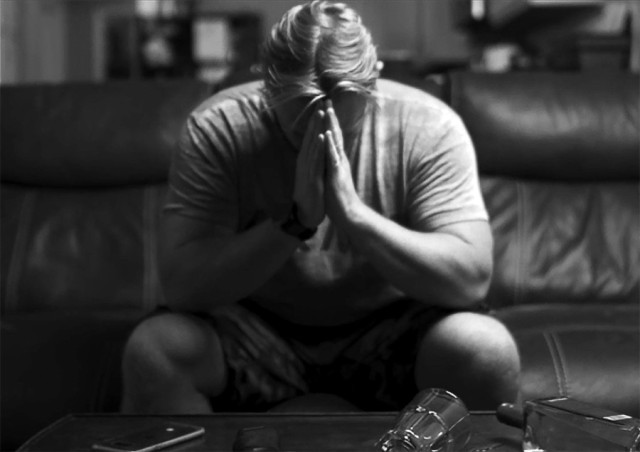
Regular army Chaplain (Lt. Col.) Scott Koeman knows that the issue of suicide can be difficult to discuss and more difficult to combat. Prevention ties into the Army'south top priority of taking care of people and, since the onset of COVID-19 earlier this year and ensuing quarantines and isolation, the number of suicides nationally has risen dramatically.
Koeman, a chaplain with 34 years' experience, knows the issue too well. He's conducted classroom training discussing suicide prevention and counseled dozens of individuals with suicidal ideations – thoughts and feelings of taking one's own life – in his career. He has also counseled family, friends and coworkers of those affected by the ordinarily sudden loss of a loved one or colleague.
The chaplain breaks downwardly the outcome of suicide prevention into areas of awareness – sensation of the need for healthy habits and healthy relationships and reaching out to lifelines when necessary.
"It's hard to overemphasize the demand for self-awareness," he stated. "When it comes to your overall mental, emotional, relational, spiritual, concrete, health. We're very complex beings, and then information technology's never just i facet of our lives that starts to breakdown, or be put on pause, that causes any of the states to starting time to have self-doubtfulness and thoughts of hurting ourselves or suicide."
Many factors are usually involved, Koeman said, leading to a downward spiraling in an individual'due south overall well-being. A decrease in physical activity, feelings of isolation, or generally not feeling up to par, can be compounded when an outcome occurs that amplifies the feelings already nowadays. The event could be large or small-scale, relatively speaking. Perhaps it'southward a sudden disruption to a routine, possibly it's an illness or the death of a friend or loved one or a divorce or separation.
"We've already found ourselves in a situation where we're not emotionally healthy, physically good for you, and relationally healthy," Koeman stated, adding that a stressful event tin can cause someone to question whether or not live is worth living.
"Preemptively, nosotros must learn to really piece of work at our own health, our ain well-being in all of its various facets — spiritually, mentally, emotionally.
"It'due south really important to have a good network of friends who can encourage you lot emotionally and spur you on and to accept salubrious relationships."
Relationships defective reciprocity, where ane party takes far more than they give, would be an instance of unhealthy relationships, Koeman said, adding that such relationships need to be avoided, especially for someone who's not in a healthy state themselves.
"Self-sensation is critical. Adept, healthy habits are a part of that, which sounds and so simple, then small, but (healthy habits) accept significant consequences," he added.
Adhering to a regular schedule, including a regular sleep schedule, tin go a long way toward staying healthy.
"In that location are a number of studies that have been done regarding sleep," Koeman said. "Yous will know when yous're in a healthy place with your rest. When your mind can rest at night, during your sleep wheel, you find yourself where, fifty-fifty on a weekend, you're getting out of bed about the same time, without your alert equally you work during the week. All the hormones and chemicals in your trunk piece of work together, or they tin can work against you."
Although our bodies need restful sleep to restore rest, Koeman acknowledges that some people need medical assistance when it comes to body chemistry.
"Anecdotal ideas of good concrete, mental, spiritual, relational emotional health don't negate the need for some people to really accept a close working human relationship with their doctor. Those who have to take meds too to take that aforementioned consistency in their nutrition and slumber and relational connection."
From the cocky-awareness perspective, suicidal ideations require activity on the part of the individual.
"If someone has gotten that far, they take to irksome down the video, and maybe even hit the 'suspension' push button," Koeman said.
"Proper name iii to v people who, who would be absolutely devastated -- parents, siblings, spouse and close friends -- those near important to you in your life and who know you so well. Those are your lifelines.
"Those are the people that you have to achieve out to and say, 'hey, mom, hey, dad. hey, dearest, I but demand you to know I've been in a nighttime identify in my life, and I don't know how to say this without just saying it bluntly, simply I've even had thoughts of killing myself. I don't know why or where all this comes from. But it'south existent. I merely desire you to know that. I need you in my life and I don't really want to kill myself, but I'd have these thoughts."
They might be shocked, he said, but "they're not going to call back less of you; they're going to know, they're going to be aware and they can link in with you more ofttimes with a 'Hey, how are you doing? Have y'all had any more thoughts of taking your life? Have you had whatever more thoughts of suicide or hurting yourself?'
"At that point, the lifeline is everything. Y'all've got to have those lifelines and notify them. That's probably the hardest thing anybody can probably do, but it'south the nearly critical."
"Anywhere along the way, at any betoken, you tin ever reach out to psychologists, psychiatrists, social workers, or chaplains," Koeman added.
Ground forces chaplains, he noted, legally have no restrictions on their confidentiality.
"When y'all call a chaplain, information technology is one-hundred percent confidential. People accept had inhibitions because they're worried nigh their careers and reputations, only unless the person who contacts the chaplain release the chaplain from that obligation, they're forbidden to hash out anything," he said, noting that the brake is complete and a commanding general or a civilian supervisor has no say-so to exact information.
"What we practice, every bit a professional, is to offer you assistance. We can't reach through the telephone and remove the gun from their hand or have away the bottle of pills," Koeman said. "What we're going to finish up doing, in the long run, is providing that lifeline. At the end of the 24-hour interval, if someone calls me and says, 'I'thousand thinking nigh taking my life', I'm going to help you see the value of life.
"Before I'k done, I'm going to link you back to the most significant people in your own life. And I'm going to enquire you questions like, 'who do you well-nigh care about?' Who do you recollect most cares about you?'
"It might be difficult. Your list might be short. And if you've been in a dark place for a long time, and you burned a lot of bridges with a lot of people, then the listing can go rather short. Merely, in that location's always somebody and at that place's ever hope!"
Chaplain Koeman said he's available to talk to anyone within the TACOM customs – Soldier, civilian or contractor. He can be contacted at (586) 219-0759.
Source: https://www.army.mil/article/239787/command_chaplain_awareness_key_to_suicide_prevention
0 Response to "what does a chaplain say to someone who attempt to take his life"
Post a Comment